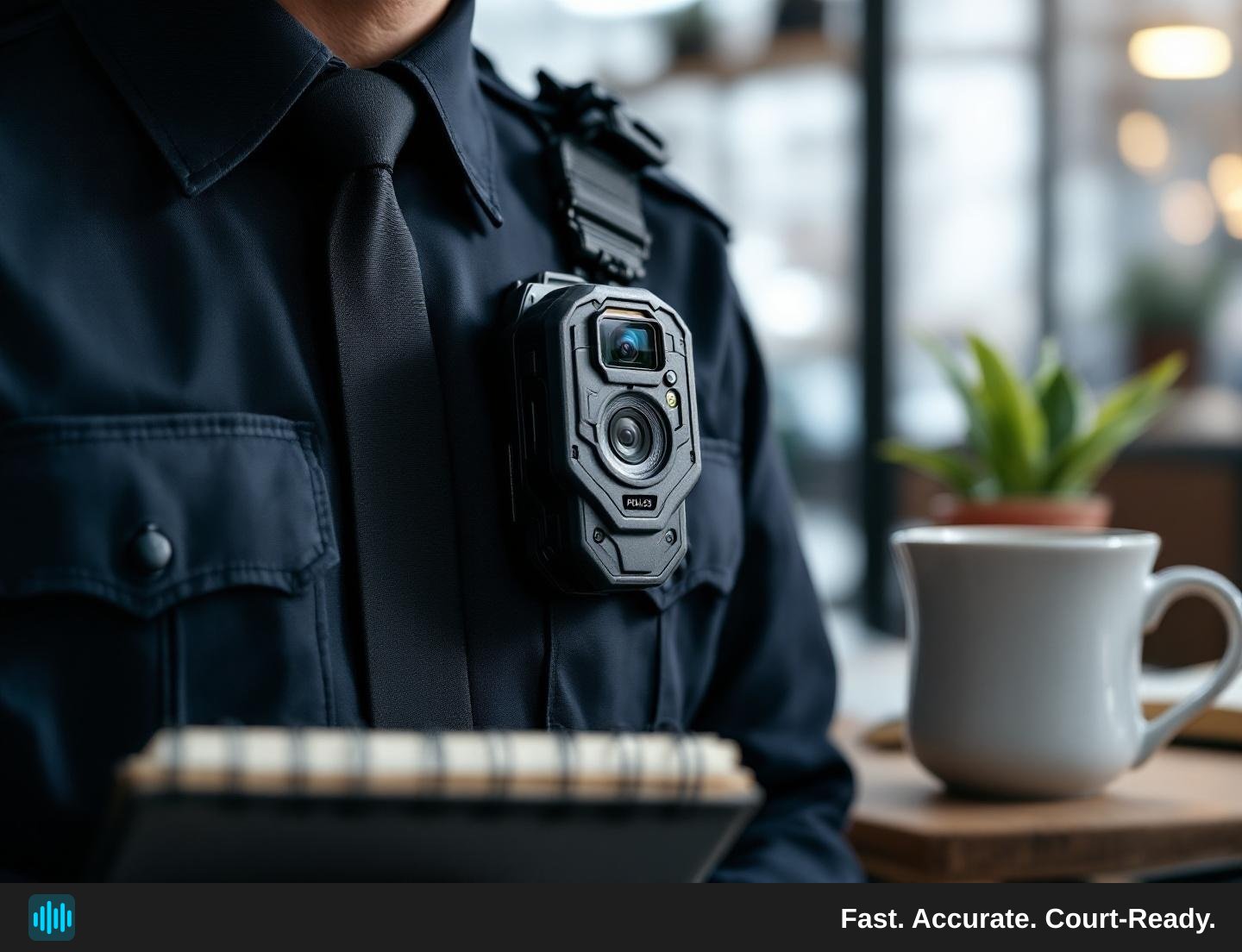
In today’s digital age, law enforcement agencies are increasingly relying on body cameras and recorded interviews to document critical interactions. However, these recordings often require precise legal transcription to ensure compliance with regulations and to support legal proceedings. Accurate transcription not only aids in record-keeping but also plays a vital role in maintaining the integrity of the judicial process. This blog post delves into the importance of transcription for body cam footage and interviews, focusing on accuracy, compliance, and the associated costs.
Understanding the Need for Accurate Transcription
The Role of Body Cameras and Recorded Interviews
Body cameras have become a standard tool for law enforcement agencies, providing a visual account of interactions between officers and the public. These recordings are invaluable for various reasons:
- Evidence in Legal Proceedings: Video evidence can corroborate testimonies and provide a clear account of events.
- Accountability: Body cameras promote transparency and accountability within police departments, as they offer an unbiased record of interactions.
- Training and Policy Development: Recorded interviews and encounters serve as training tools for new officers and help refine departmental policies.
However, the effectiveness of this technology hinges on the ability to convert recorded content into a usable format. This is where legal transcription comes into play. Accurate transcription of body cam footage and interviews is essential for ensuring that critical information is preserved and easily accessible.
Compliance Requirements in Law Enforcement
Transcribing body cam footage and interviews is not merely a matter of convenience; it is often a legal requirement. Many jurisdictions mandate that law enforcement agencies maintain accurate records of interactions, particularly those that may lead to criminal charges or civil litigation. Compliance with these regulations is crucial to avoid legal repercussions and to uphold the rights of individuals involved.
- Public Records Laws: Many states classify body cam footage and interview transcripts as public records, necessitating accurate and timely transcription.
- Chain of Custody: Maintaining a clear chain of custody for evidence is vital in legal contexts. Proper transcription helps document who has accessed or altered recordings.
- Quality Assurance: Courts often require that transcripts be certified, ensuring they meet specific standards of accuracy and reliability.
Legal Transcription Pricing: What You Need to Know
Understanding Cost Structures
When it comes to legal transcription pricing, understanding the cost structures can help law enforcement agencies budget effectively. Legal transcription services typically charge based on several factors:
- Length of Recording: Most services charge per audio minute or per page of transcription. For law enforcement recordings, this can vary significantly based on the length of interactions.
- Complexity of Content: Interviews with legal jargon or multiple speakers may incur higher costs due to the increased accuracy required during transcription.
- Turnaround Time: Urgent requests for transcription often come with premium pricing. Agencies should plan ahead to avoid inflated costs associated with expedited services.
For example, a typical body cam footage recording lasting 30 minutes may result in a transcript of approximately 10 pages, with transcription services charging between $3 to $6 per page. By choosing a reliable transcription service like TranscribeLegal, agencies can significantly reduce costs while maintaining high standards of accuracy.
Budgeting for Transcription Services
Given that legal transcription is a standard litigation expense, law enforcement agencies can pass these costs through to clients or involved parties. This approach can help mitigate the financial burden on agencies while ensuring compliance with legal standards. Here are some budgeting tips:
- Estimate Recording Volume: Assess the volume of recordings generated monthly to predict transcription needs accurately.
- Negotiate Bulk Pricing: Many transcription services offer discounted rates for bulk orders, which can be beneficial for agencies with high recording volumes.
- Utilize Cost-Effective Solutions: Choose services that provide efficient turnaround times without compromising accuracy, allowing agencies to allocate resources more effectively.
Ensuring Accuracy in Transcription
Importance of Speaker Diarization
In the context of body cam footage and interviews, multiple speakers may be present, making it crucial to clearly identify who is speaking at any given time. Speaker diarization is a key feature that enhances the accuracy of transcription:
- Clarifies Context: Knowing who is speaking helps contextualize statements, which is essential in legal contexts.
- Reduces Ambiguity: Misattributing quotes can lead to misunderstandings and potential legal implications.
- Improves Usability: Transcripts that clearly identify speakers are far easier for attorneys and judges to navigate.
Quality Control Measures
To ensure the highest level of accuracy, agencies should consider the following quality control measures:
- Use Certified Transcription Services: Engaging a professional transcription service that employs certified transcriptionists can significantly improve the quality and reliability of transcripts.
- Implement Review Processes: Establish internal review protocols where transcripts are checked against recordings to verify accuracy.
- Solicit Feedback from Legal Teams: Regularly gather feedback from attorneys and legal secretaries who utilize transcripts to identify areas for improvement.
Case Scenarios: The Impact of Accurate Transcription
Scenario 1: A Critical Incident Review
Consider a situation where a police officer is involved in a critical incident that results in a public outcry. The body cam footage captures the entire event, and the recorded interview with the officer provides insights into their decision-making process. Accurate transcription of both the footage and interview becomes vital for:
- Internal Review: The police department conducts an internal investigation to assess the officer's actions. Transcripts provide clear documentation of the events and decisions made.
- Public Disclosure: The agency must comply with public records requests. Accurate transcripts ensure that the information shared is reliable and transparent.
- Legal Defense: If civil litigation arises, having precise transcripts can be crucial in defending the actions of the officer and the department.
Scenario 2: Train-the-Trainer Workshops
Law enforcement agencies may utilize recorded interviews and body cam footage for training purposes. For example, a department might conduct workshops to train new officers on proper engagement protocols. Accurate transcription of these recordings aids in:
- Creating Training Materials: Transcripts can be used to develop training manuals that reflect real-life scenarios, enhancing the learning experience for new recruits.
- Enhancing Accountability: Documenting training sessions ensures that all officers receive consistent information and are held accountable for their actions in the field.
- Identifying Areas for Improvement: Analyzing transcripts can help departments identify recurring issues or challenges, leading to better training practices.
The Future of Law Enforcement Transcription
Advancements in Technology
As technology continues to evolve, so too will the methods of legal transcription. Innovations such as artificial intelligence and machine learning are beginning to play a significant role in transcription services:
- Automated Transcription: AI-driven transcription services can provide quicker turnaround times, though they may require human review for accuracy, particularly in legal contexts.
- Real-Time Transcription: Some platforms now offer real-time transcription capabilities, allowing officers to access transcripts immediately after an encounter.
- Integration with Case Management Systems: Future advancements may lead to seamless integration of transcription services with case management software, streamlining the workflow for law enforcement and legal teams.
The Importance of Staying Compliant
As the legal landscape evolves, maintaining compliance with transcription requirements will remain paramount. Law enforcement agencies must stay abreast of changing regulations and invest in transcription services that align with these standards. By prioritizing accuracy and compliance, agencies can protect their integrity while serving the community effectively.
Conclusion: Elevate Your Transcription Needs with TranscribeLegal
In the fast-paced world of law enforcement, the importance of accurate transcription for body camera footage and interviews cannot be overstated. From ensuring compliance with legal regulations to providing crucial evidence in court, the benefits of high-quality legal transcription are clear. By understanding the costs associated with transcription services and implementing best practices for accuracy, law enforcement agencies can enhance their operations significantly.
When it comes to legal transcription, TranscribeLegal stands out as a reliable partner. Our fast, accurate transcription services with speaker diarization and court-ready formatting are designed specifically for legal professionals. By choosing TranscribeLegal, you can reduce transcription costs while providing top-notch service to your clients.
Contact us today to learn how we can help streamline your legal transcription needs!