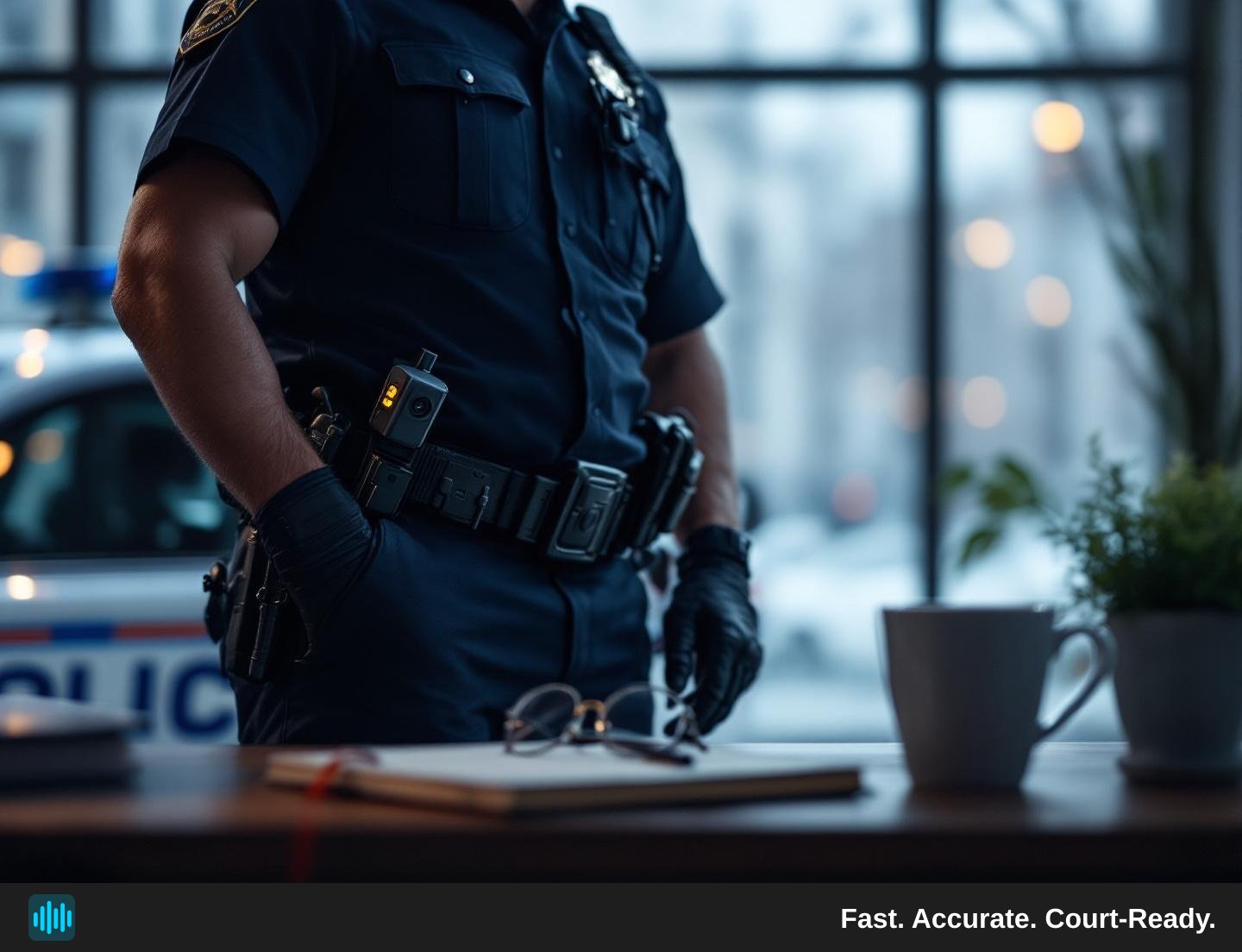
In recent years, body-worn cameras (BWCs) have become a crucial tool for law enforcement agencies. They provide valuable evidence during investigations, enhance accountability, and aid in training. However, the effectiveness of bodycam footage relies heavily on its transcription. Accurate transcriptions not only serve as critical documentation but also play a significant role in legal proceedings. This comprehensive guide will explore best practices for bodycam and law enforcement transcription, accuracy standards, and the legal admissibility of transcriptions.
Understanding Bodycam Transcription
What is Bodycam Transcription?
Bodycam transcription involves converting audio and video recordings from body-worn cameras into written text. This process can include dialogues, background sounds, and other important auditory elements that can provide context to the visual content. Law enforcement agencies utilize bodycam transcription for various purposes, including:
- Evidence Documentation: Transcripts serve as official records that can be presented in court.
- Training and Review: Transcribed footage can be used for training officers in best practices and reviewing conduct.
- Public Transparency: By making transcripts available, agencies can foster community trust and accountability.
The Role of a Bodycam Transcription Tool
Utilizing an efficient bodycam transcription tool is vital. These tools enhance the transcription process by providing features such as:
- Speaker Diarization: Identifying different speakers in conversations, which is crucial for legal contexts.
- Timestamping: Automatically adding timestamps to the transcription, making it easy to reference specific moments in the video.
- High Accuracy Rates: Leveraging advanced algorithms and AI to deliver precise transcriptions.
Best Practices for Bodycam Transcription
Establish Clear Guidelines
When transcribing bodycam footage, it’s essential to establish clear guidelines to ensure consistency and accuracy. Here are some key points to consider:
- Formatting: Maintain a uniform format throughout the transcription, including speaker labels, timestamps, and any relevant descriptions.
- Editing Standards: Develop a process for editing and reviewing transcriptions to eliminate errors and inconsistencies.
- Confidentiality: Ensure that sensitive information is handled appropriately, adhering to legal and ethical standards.
Utilize Quality Tools
Investing in a reliable bodycam transcription tool can significantly improve the quality and efficiency of your transcription process. Look for tools that offer:
- High-Quality Audio Processing: The ability to filter background noise and enhance voice clarity.
- Integration Capabilities: Tools that can integrate with case management systems for easy access and organization.
- Custom Vocabulary: Features that allow you to add specific legal terms or jargon to improve accuracy.
Training Staff Effectively
Proper training of staff involved in the transcription process is crucial. Consider the following:
- Workshops and Seminars: Regular training sessions can keep the team updated on best practices and technological advancements.
- Hands-On Practice: Encourage staff to practice transcribing various scenarios to become familiar with different voices and contexts.
- Feedback Mechanisms: Create a system for providing constructive feedback to improve transcription skills continuously.
Accuracy Standards for Bodycam Transcription
Importance of Accuracy
Accuracy in bodycam transcription is non-negotiable, especially in legal contexts. An error in a transcript can lead to misunderstandings or misrepresentations in court, potentially altering the outcome of a case. To maintain high accuracy standards, consider the following:
- Proofreading: Always have a second set of eyes review the transcript for errors, ensuring clarity and precision.
- Use of Technology: Leverage AI-powered transcription tools that offer real-time error detection and correction capabilities.
- Regular Audits: Conduct periodic audits of transcriptions to identify common errors and areas for improvement.
Setting Accuracy Benchmarks
Establish concrete accuracy benchmarks for your transcription process. Aim for:
- 95% Accuracy Rate: This is a commonly accepted standard in the legal field. Regularly assess your transcription against this benchmark to ensure quality.
- Documented Procedures: Maintain documentation of your transcription processes and accuracy assessments to track improvements over time.
Legal Admissibility of Transcriptions
Understanding Legal Implications
Transcriptions of bodycam footage can be used as evidence in court; however, their admissibility depends on several factors:
- Chain of Custody: It’s crucial to maintain a proper chain of custody for the original footage and the transcription. This ensures that the evidence has not been tampered with.
- Authentication: Transcriptions must be authenticated by someone knowledgeable about the content to verify that they accurately reflect the original audio.
- Compliance with Legal Standards: Ensure that transcriptions comply with local and federal laws regarding evidence and documentation.
Case Studies: The Impact of Effective Transcriptions
Examining real-life cases where bodycam transcriptions played a pivotal role can highlight the importance of accuracy and legal admissibility:
- Case of Misconduct: In a high-profile case, bodycam footage of an officer's conduct was transcribed. The accurate transcript provided clear evidence of the officer's actions, leading to disciplinary action. Without a reliable transcript, the case may have lacked the necessary clarity.
- Defense Argument: A defense attorney used a transcript from bodycam footage to argue for their client's innocence. The detailed transcript allowed the attorney to point out discrepancies in witness testimonies, showcasing the importance of having precise documentation.
Law Enforcement Transcription Pricing
Understanding the Cost Structure
When considering law enforcement transcription pricing, it’s essential to understand the factors that influence costs:
- Volume of Transcription: The more footage that needs transcription, the higher the overall cost. However, this can often be balanced by the potential to bill clients at court reporter rates.
- Complexity of Content: Transcriptions that require additional editing or formatting may incur extra charges. For instance, audio with multiple speakers or heavy background noise may require more time and resources to transcribe accurately.
- Turnaround Time: Expedited services typically come at a premium. If you require quick turnaround times, be prepared for higher pricing.
Cost-Benefit Analysis
While transcription services may involve costs, they are often a billable litigation expense that attorneys can pass through to clients at court reporter rates. This pricing strategy can make transcription a net revenue generator. For instance, if a law firm pays $2 per page for transcription but can bill clients at $4 per page, they not only cover their costs but also gain additional revenue.
Conclusion
Bodycam and law enforcement transcription play an essential role in maintaining transparency, accountability, and accuracy within the legal system. By adhering to best practices, ensuring high accuracy standards, and understanding the legal implications of transcriptions, law enforcement agencies can effectively utilize this valuable tool. Investing in the right bodycam transcription tool and adhering to established guidelines will enhance the quality of transcriptions, ultimately benefiting the entire legal process. For those looking to explore cost-effective transcription options, See TranscribeLegal pricing to find a solution that meets your needs.